
Reading ZIP Code Directory Coverage
The official material located for Reading verifies one standard mailing ZIP. That is a useful postal starting point, not a claim that the ZIP precisely traces the legal town line or every physical parcel. Verify a complete delivery address before relying on any address format in a record search.
| ZIP | Areas Covered | Post Office | Notes |
|---|---|---|---|
| 01867 | Reading, Massachusetts mailing addresses | Reading Post Office, 136 Haven Street | One verified Reading ZIP. No official second standard ZIP, split, realignment, or documented boundary crossing was located. |
The postal directory therefore has an important limit: it can report the verified postal route for Reading, but it should not invent neighborhood-by-neighborhood postal boundaries or an unverified historic change. For an address near another municipality, use the full delivery address at USPS and then check the physical parcel with the town's own systems.
Use USPS for a Reading ZIP Code Answer
USPS address lookup is the authority for address-level postal verification. Enter the complete delivery address rather than relying on the city label alone. Its postal result can confirm the ZIP, ZIP+4, and preferred mailing-city format. The research supports 01867 as the ordinary Reading ZIP and identifies the Reading Post Office at 136 Haven Street.
| Lookup detail | Use it for | Do not use it for |
|---|---|---|
| Complete delivery address | Postal ZIP and preferred mail format | Proof that every person associated with the address lives there |
| ZIP+4 result | More precise delivery routing | A municipal parcel, precinct, or legal description |
| City label | Mailing convention | Substituting for a physical-situs check |
The USPS address-lookup screen is the source for this postal step.
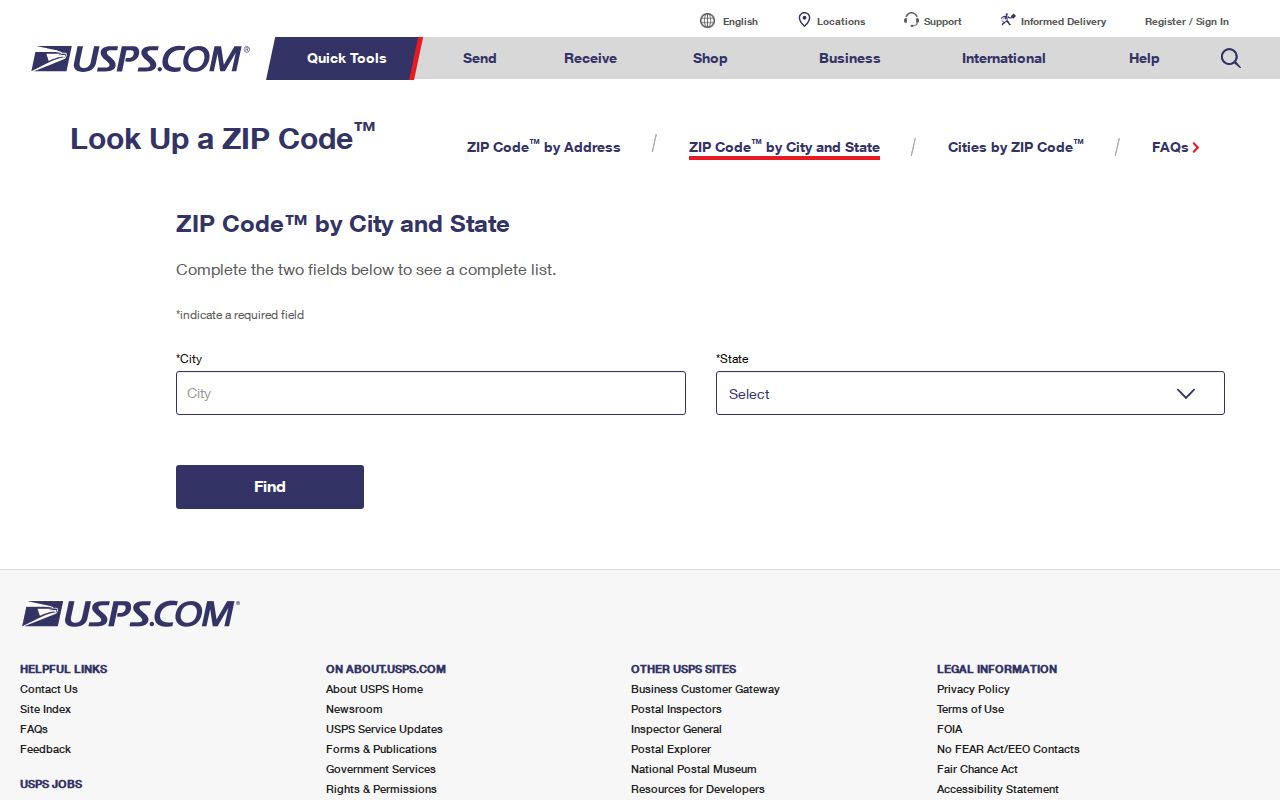
Once USPS gives the mail answer, move to Reading Assessment or GIS for the separate question of where the parcel sits.
That sequence also prevents a common record mismatch. A business, school, post-office box, or neighboring-town address can use postal wording that differs from a parcel's legal municipality. The postal result is still useful, but it should travel with the full address and date of the lookup. A copied ZIP beside a name is not enough context to decide which town office, Registry district, or property map has the related record.
A Reading ZIP Code Directory Is Postal, Not Municipal
ZIP geography, a municipal parcel situs, a voter precinct, and an owner's mailing address are separate things. The municipal sources do not document a Reading address outside town using 01867, a different-town address carrying the Reading ZIP, or a historic ZIP realignment. The absence of that evidence is a reason to verify a specific address, not a reason to claim that postal and town lines are identical.
Reading borders North Reading, Wilmington, Woburn, Stoneham, and Wakefield. That regional context makes it especially important to distinguish a mailing label from a legal municipality. A mailing address can differ from a parcel's situs, and an assessor's owner field can concern a person who is not at the property. A ZIP is postal routing metadata, not a neighborhood label or a proof of residence.
Boundary check. Use USPS for delivery routing, the assessor or GIS for a Reading parcel, and the precinct map for election geography. Each answers a different question.
Find a Reading Resident by ZIP, Then by Parcel
A ZIP-first search cannot produce a complete official list of Reading residents. The useful workflow narrows an address and then switches to the portal keyed to the next fact. It protects against treating a postal code as a directory of people.
- Verify the complete delivery address in the USPS address lookup and save the postal result as the mailing clue.
- Use Reading Patriot Properties with street name, owner name, or parcel ID to locate the assessment record.
- Browse the official Reading Street Listing by location or parcel when a street-based review is needed. Its public fields are not organized by ZIP.
- After a parcel is selected, use an abutters record if available to read the explicit mailing city, state, and ZIP columns without confusing them with the property situs.
- Use the individual voter-status form only when the person provides the required name, birth date, and ZIP. Use GIS to confirm the physical parcel.
Once a ZIP has narrowed the mail question to a street, the Reading street directory provides the fuller address-by-address records route.
Reading ZIP Code Search Fields in Voter Status
The Massachusetts voter-status page is the only inspected public form in this workflow that requires a ZIP, but it is deliberately an individual verification tool. Its ZIP field is not a filter for returning everyone within 01867, and the Commonwealth does not expose a complete ZIP-indexed Reading resident export through that form.
| Field | Required | Reading use and limit |
|---|---|---|
| First and last name | Yes | Identifies the individual being checked |
| Birth month, day, and year | Yes | Part of the individual match, not a public browse field |
| ZIP of residential address | Yes | Five-digit qualifying-address ZIP, not a ZIP-wide search |
| Understanding statement | Yes | Confirms the form is intended for the individual voter |
The Secretary's voter-information access rules direct public record requests to local election offices. Reading's Town Clerk and Elections office holds local records, subject to public-field rules and confidential-voter protections.
Those public rules distinguish an ordinary voter record from the status screen. They describe name, address, party, date of birth, active or inactive status, and voter ID as public voter-list fields, with some additional information available by request. They also withhold phone, email, veteran status, permanent-absentee status, confidential-voter information, and minor or pre-registrant data. Ask Reading Elections for the current request instructions when a defined public election record is needed.
What Reading Postal Searches Cannot Do in Patriot or MapGeo
Patriot Properties offers Street Name, Owner Name, and Parcel ID on its public landing search. It does not present a ZIP field. MapGeo is a spatial viewer with Property Quick Search, parcels, easements, town boundary, and map themes, but the inspected public interface does not offer a ZIP-first field. These are useful tools after an address or parcel is known, not replacement ZIP directories.
The Reading Street Listing is also keyed by location, owner, and parcel fields rather than ZIP. An abutters list can be valuable after the selected parcel is known because its columns distinguish property location from owner mailing address, city, state, and ZIP. That is a concrete comparison: postal mailing data and assessed situs can point to different geographies without either being an error.
Reading ZIP Code Geography Is Not a Precinct Map
Reading has eight voting precincts under the map effective January 1, 2022. The change follows the 2020-census map context, so a historical civic record should be read in its proper precinct era. Precincts are useful political geography, but they do not replace a postal ZIP or return a street-by-street list of residents.
The town's map resources and Reading MapGeo can help confirm a parcel or town-boundary context. The research did not locate official ZIP-by-ZIP population or voter counts. Use the public map and local election custodian for the specific geographic question instead of projecting a ZIP statistic that has not been published.
Older Reading Records Predate ZIP Routing
Reading's historical directory holdings begin with a combined Stoneham, Wakefield, and Reading directory from 1869, followed by State Library holdings through 1941. Those volumes organize people and places by town, surname, street, and sometimes address material, not by a postal code added later. Search the town heading and street or name forms that the period used rather than inserting a modern ZIP into an old record.
Another local continuity quirk is the FY2010 renumbering of Reading tax maps and lots. It changed parcel identifiers to support new financial software; it did not establish a street-number or ZIP change. When an old tax list or directory does not match a current parcel, use legal description, plan, lot shape, adjacent owners, old tax maps, and the Registry to bridge the record.
Limits of the Reading ZIP Code Directory
This directory can verify a postal detail and explain which official system comes next. It cannot supply a full resident roster, prove the town boundary, replace a parcel check, or convert a historical directory into a modern postal database. When a portal does not index by ZIP, use the indexed field it actually provides and keep the custodian's limits intact.
For an unexplained mismatch, keep the separate evidence in view: the USPS result for delivery, the assessor's location and parcel for situs, the Registry document for a recorded land fact, and the voter or precinct record only for its limited civic purpose. If the municipal record itself is missing, Reading's Records Access Officers can help identify a public existing record, but a request does not require the Town to produce a new ZIP-indexed list of people.
- ZIP and ZIP+4
- A ZIP directs mail to a postal area; ZIP+4 adds a delivery-routing segment. Neither is a municipal parcel identifier.
- PO-box ZIP
- A postal code used for post-office boxes. It need not describe the location of a physical parcel.
- Unique ZIP
- A postal code assigned to one organization or receiving point. No such Reading ZIP was verified in the official research.
- Carrier route
- A mail-delivery grouping used by USPS. It is not a town boundary, precinct, or public list of people.
Note. For an address that needs formal confirmation, retain the USPS result and consult the official municipal record that matches the specific property or civic question.