
Records Behind a Reading Resident Lookup
Reading has no single master name index. The right starting record depends on the question. Land questions point to the assessment roll and parcel. A life event points to vital records. Historical affiliations point to library directories, newspapers, and probate trails, while business connections point to corporate filings. Each source has its own custodian and its own date range, so any match only proves what that record was made to show, never a blanket identity.
| Record | What It Confirms | Where | Access |
|---|---|---|---|
| Assessment record | Assessed owner, parcel, and situs | Reading Patriot Properties | Free public search; not an occupant list |
| Recorded land | Party role, document, date, and legal description | Middlesex South MassLandRecords | Search and inspected images are free; certified copies are separate |
| Voter status | An individual registration match | Massachusetts voter status | Individual-use form; protected voters are excluded |
| Court docket | Party, case, events, and disposition where public | MassCourts | Online result or clerk and public-terminal route |
| Vital record | A qualifying birth, marriage, death, or divorce reference | Reading Town Clerk or RVRS | Recent material has statutory limits; local copy is $10 |
| Business or license filing | Filed connection or public credential status | Secretary of the Commonwealth or DOL | Free public search where the record is available |
Match the record to the moment. A present-day property question starts with the assessment record and parcel, while a historical name often yields a better dated clue in a library directory, yearbook, newspaper, or probate trail. The voter status form belongs only to voters checking their own registration. Likewise, a court or Registry result should be read strictly for the event it records.
Start Each Reading Name Check With Variants
Names shift shape across Reading records. Before searching, write down the full name and middle initial. Add the former or maiden name, likely spellings, initials, and a date range. A property record may list an owner name and a court index a party name. Neither alone proves two similar entries describe the same person. Keep a short evidence note beside each result. Record the document date and the address or parcel if shown. Add the court location and the source itself. Two independent fields compared together carry far more weight. Think name plus parcel, or name plus event date. Expanding a search until a familiar-looking entry appears is the weaker habit.
A Reading Resident Lookup and the Voter Status Tool
The Commonwealth's voter status form asks for first name, last name, and birth month, day, and year. It also wants the five-digit ZIP of the residential address. An acknowledgment is required too. It states that the tool serves the individual voter. That design matters. The form is not a townwide or ZIP-wide export. A non-match does not mean a person never lived in Reading. The record may be protected, inactive, incomplete, or outside the form's intended use. The public voter-information page directs requests for public voter records to the local election office. In Reading, Elections sits within the Town Clerk's office. Ask that local custodian for a specific existing record and date range. Do not ask the state form to build a resident list. Phone, email, confidential-voter data, and several other fields stay nonpublic.
Court Geography in a Reading Resident Lookup
Reading's court route runs through the region. District matters land at Woburn District Court. Probate and family cases go to Middlesex Probate and Family Court North in Lowell. Proximity is not proof of jurisdiction. Before a docket becomes useful corroboration, the department, division, location, party name, case type, and date all have to agree. The Commonwealth's MassCourts search guide lays out the public search choices. The name search uses separate last-name and first-name fields. The case-type route limits start and end dates to a single month. The case-number and ticket fields demand exact formatting. Because results are party-oriented, a case can appear more than once. Available fields may include party name, case number, type, location, events, docket entries, and disposition.
| Question | First route | Fallback |
|---|---|---|
| District case tied to Reading | MassCourts, District division, Woburn location | Woburn clerk or a public terminal |
| Estate or probate matter | MassCourts, Probate and Family, North Lowell | Lowell register; archives for older matters |
| Specific document or correction | Exact case number and the proper clerk or register | In-person file review where public access permits |
Juvenile, sealed, expunged, impounded, adoption, confidential family, and protected-victim material may simply be unavailable. A docket shows participation in a matter, not a current Reading address.
Vital-Record Paths for a Reading Resident Lookup
The Town Clerk serves as the local registrar for qualifying Reading events. Its instructions cover births where the parents lived in Reading. They also cover births where the child was born there. Marriage intentions filed in town qualify as well. So do deaths occurring in Reading, or involving a Reading legal resident who died elsewhere in Massachusetts. A local request identifies the event and the named people. Certified copies cost $10. Payment must arrive in advance. So the town takes no certified-copy requests by phone or email. RVRS explains the statewide order channels: online, phone, mail, and in-person service. It also separates a certificate from historical research. Each channel stands on its own. The list includes the Town Clerk, RVRS, and State Archives for transferred years. FamilySearch catalog and microfilm form another. Reading Public Library local-history resources add one more. A public-records request cannot override the restrictions in M.G.L. c. 46, §2A. Under that statute, birth and marriage records generally open after 90 years. Death records open after 50 years. Both rules remain subject to categories and exceptions. For divorce research, RVRS can return a year, court, county, and docket for the period it holds. The decree itself comes from the court. The RVRS ordering page shows the official request route and the different service choices.
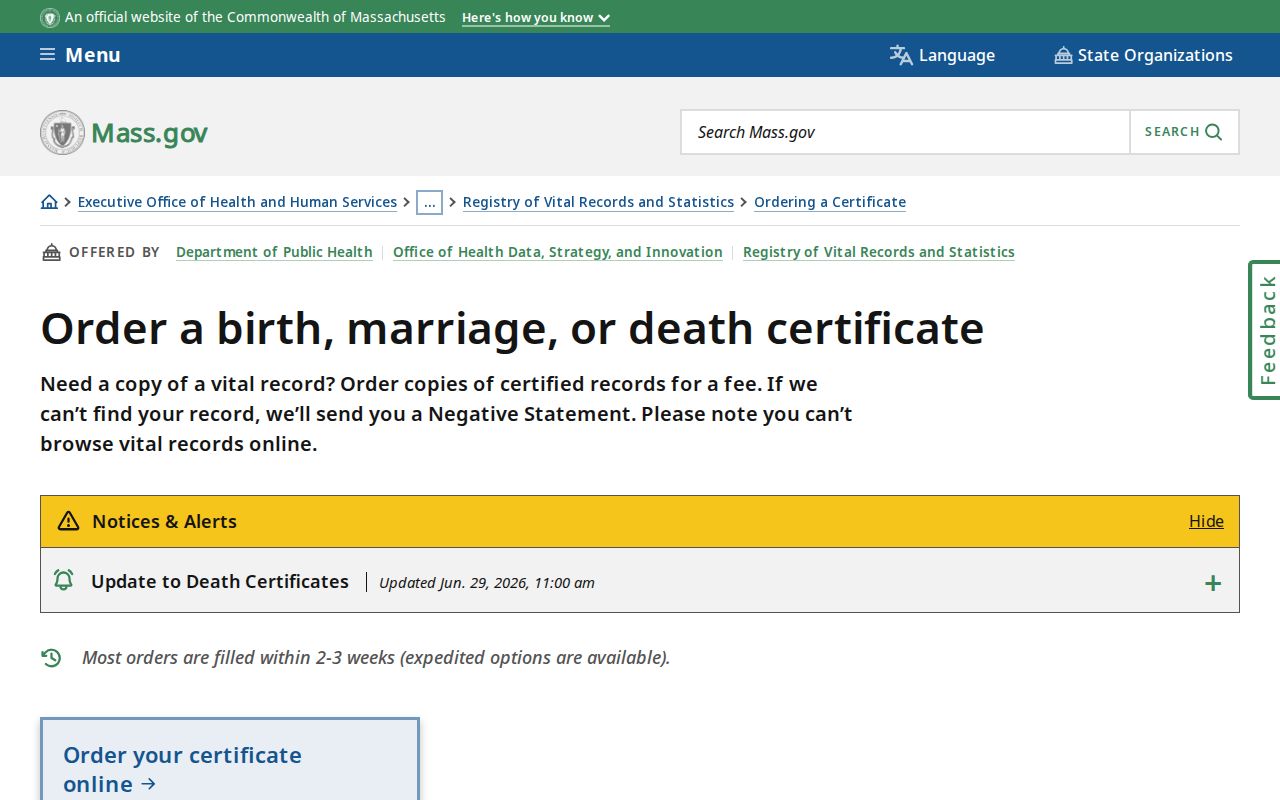
Let the image serve as a reminder to pick the custodian and order path that match the event, rather than treating a historical index as a certified record.
Verify a Reading Resident Lookup With Two Fields
Verification works best as a sequence. A name alone proves very little in any Reading residents directory search. Begin with one record that fits your purpose, such as a parcel listing or a voter roll entry. Then add a second field drawn from a different record. Confirm the time period. Send any mismatch to the office that keeps the source. This method tests a documented Reading connection without stretching the records past what they actually say.
- List name variants and decide what the record must answer: land connection, individual voter status, case, vital event, estate, or filed business role.
- Use the appropriate official source, then compare at least two fields, such as name and parcel, name and date, or name and court location.
- Check dates before combining results. Reading's FY2026 assessment data reflects ownership and assessment changes as of January 1, 2025, while a deed, docket, or directory may record a different period.
- Confirm the jurisdiction: Reading land records are in Middlesex South, district matters route to Woburn, and Reading probate routes to North Lowell.
- When something is incomplete or wrong, ask Assessment, Reading Elections, the clerk or register, Middlesex South, or the issuing registrar/RVRS about the correction process.
- Docket
- A court's running case record, which can list parties, events, entries, and disposition without proving identity or current residence.
- Index and image
- An index points to a record by searchable fields; an image is the underlying page or document. Access to each can differ.
- Certified copy
- A custodian-issued copy for an official purpose. It is not the same product as an online search result or catalog entry.
What a Reading Search Result Shows
Read the displayed fields before you treat any result as a lead in a Reading resident lookup. Property results carry parcel and deed details, court results carry case details, and filing results carry submission details. Keeping those lanes straight is what makes a lookup trustworthy.
- Patriot Properties can return an assessed owner, location, parcel ID, value, and tax-map context.
- MassLandRecords can identify party roles, recording date, document type, legal description, and document or book and page reference.
- MassCourts may return party name, case number, case type, court location, events, docket entries, and disposition where public.
- A state voter result is an individual status match after the required personal fields are supplied.
- RVRS or the Town Clerk can supply a certificate or inquiry only through the rules for that record type.
Note. Keep the source date with every result, since an older record can be accurate for its event yet no longer reflect a current connection.
Business Connections in Reading Records
A business or license search confirms a filed professional connection, not ordinary residence in Reading. The Massachusetts Corporate Database takes searches by entity, individual, identification number, or filing number. Results vary by filing. They can list officers, managers, a registered agent, a registered office, a principal office, status, and the full filing history. For a Reading assumed name, the Town Clerk's DBA procedure is the local route. The Clerk publishes no online index. The DOL public search offers individual and business tabs. Fields include name, city, state, ZIP code, board, license type, and license number. Treat a business address or registered office and a Reading property record as distinct fields. Neither should be assumed to be a personal address.
When a Reading Record Is Not Posted
A missing posted record is not the end of the trail. Identify the custodian and the record type. Also note the name or address, the date range, and the format you want. Reading's Public Records page routes written requests through its Records Access Officers. Requests go to recordsrequest@readingma.gov under the Massachusetts Public Records Law, M.G.L. c. 66, §10. The general response window runs 10 business days. That route works for a defined municipal document. It does not obligate the Town to build a new compilation of residents. Court material belongs with the proper clerk or register. Older court files may require the Massachusetts Court Archives. The Registry, the library, or the Town Clerk may also offer a counter, mail, or appointment route. One of those may be better suited to the record you need.
Legal Limits for a Reading Resident Lookup
Massachusetts ties record access to the source. The Address Confidentiality Program under M.G.L. c. 9A and 950 CMR 130.00 gives eligible participants a substitute address and mail forwarding. Confidential voter registration under M.G.L. c. 51, including §51A, also keeps protected voters off ordinary public lists. A missing result must never be read as a hidden or protected address. Use only the minimum information needed. Family history fits that standard. An heir question, civic records research, and an official scam check do too. The state public offender search is a separate safety registry. It covers public Level 2 and Level 3 information. The Commonwealth's offender-information page explains that category and its access rules.
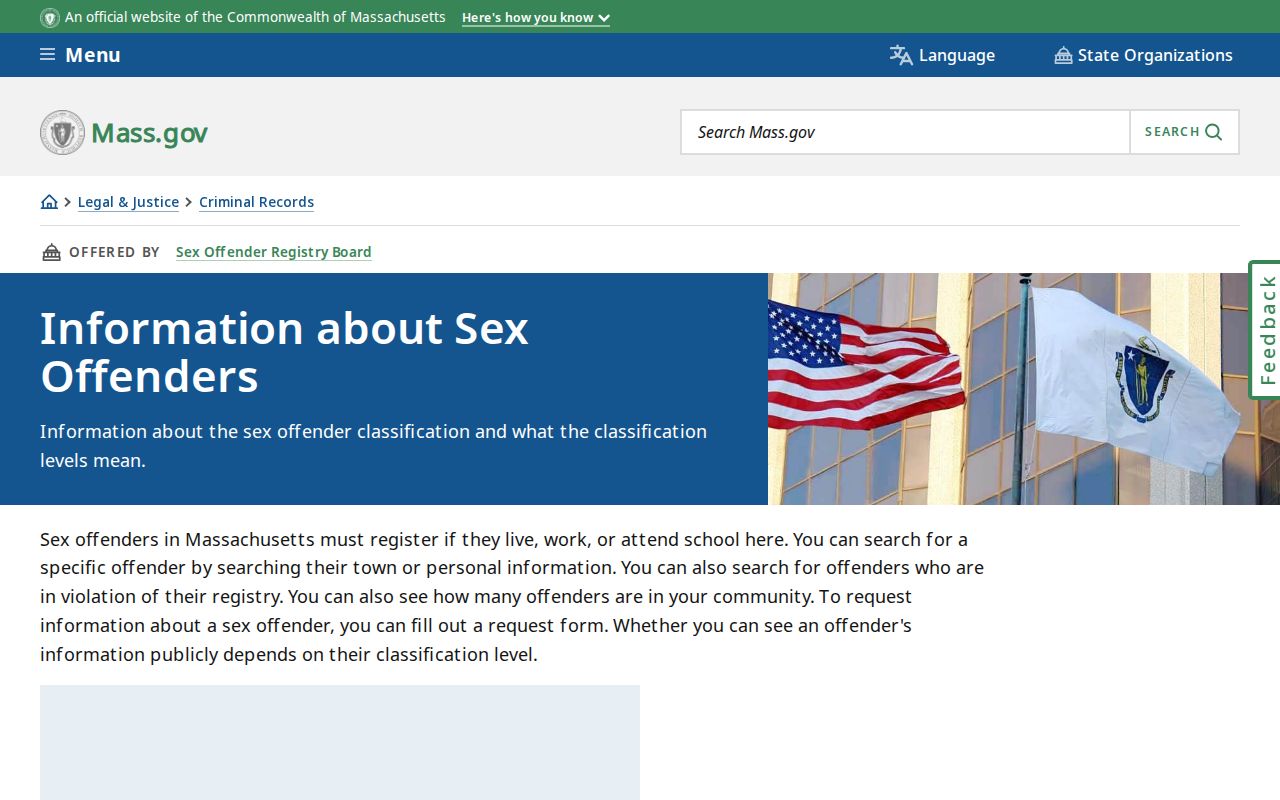
That public registry is not proof of residency. It should never be stretched past its own classification and stated scope.
Lawful use. Use Reading public records for personal, lawful research and respect protected addresses. Stalking, harassment, threats, impersonation, and repeated unwanted contact are not legitimate records use.